29.6 gigawatts of AI data-center capacity is no longer a rounding error on a grid. It is a constituency.
AiSignal staff · 5 September 2026 · 9 min read
For a decade the data-center industry could tell a calming story about efficiency. PUE got better. Workloads got denser. Total electricity went up anyway, but slowly enough that politicians could ignore it. AI ended the truce. Stanford's 2026 Index puts AI data-center power capacity at 29.6 GW — in the neighborhood of New York State at peak — and the next three years are a permitting argument, not a software one.
A gigawatt of IT is not a gigawatt at the fence. Cooling, transformation, and the superstition of redundancy inflate the interconnect request. Crusoe did not buy 4.5 GW of gas optionality because it enjoys thermodynamics. It bought it because the interconnection queue in the places you would actually put a training cluster now looks like a waitlist for a club that is on fire.
Carbon is a site choice
Grok 4's estimated training emissions, 72,816 tons of CO₂ equivalent, made a good headline because training is a discrete sin. Inference is a lifestyle. On a 0.35 kg/kWh blended grid, a 21 GW average AI load is thousands of kilograms of carbon a second. Move the same load onto hydro and the number collapses. Move it onto a gas peakers-behind-the-meter campus and it does not. The carbon story of AI will be written by county, not by model card.
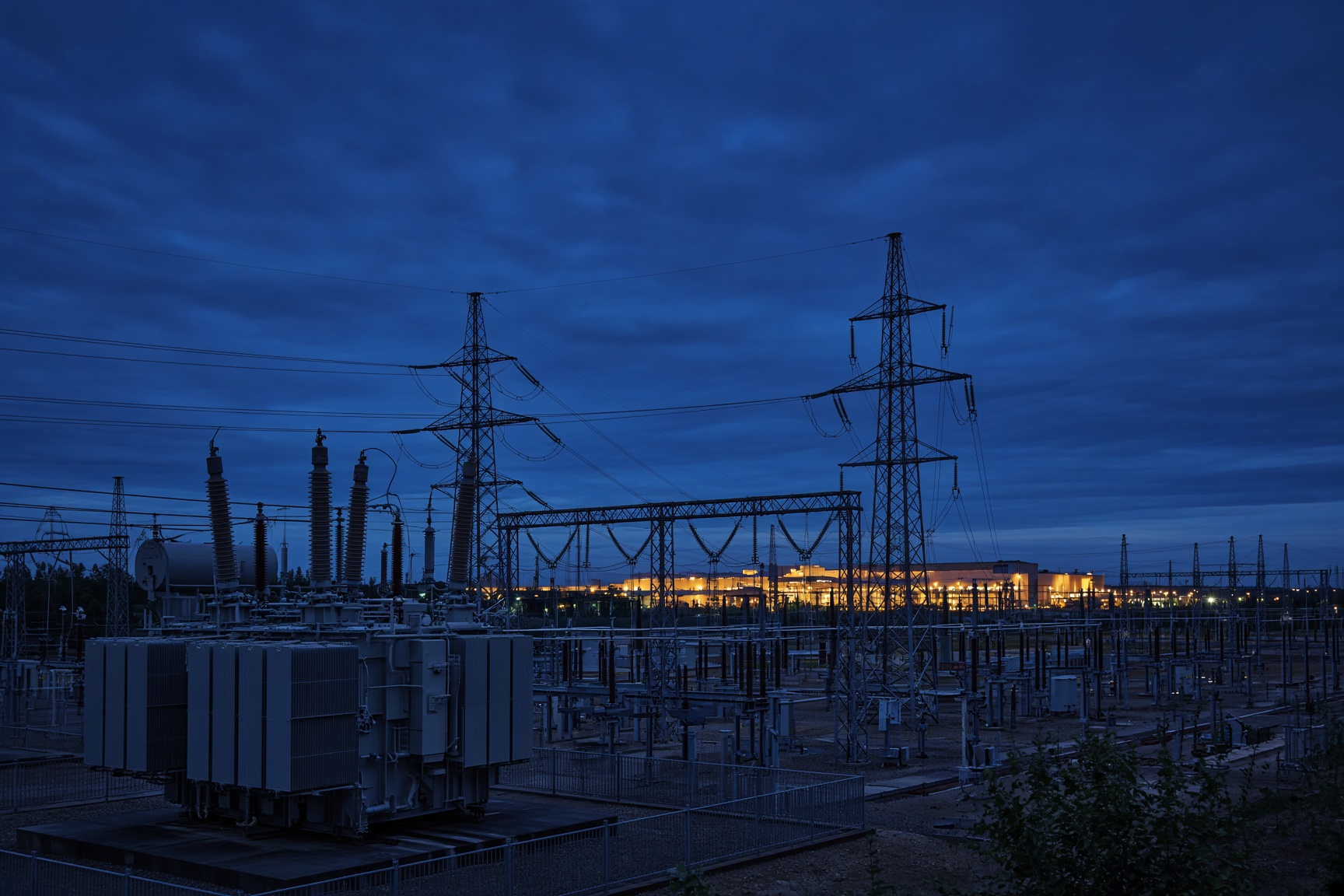
The binding constraint is no longer the compiler. It is the substation.
Water is the sleeper. Annual GPT-4o inference water use was already being compared to the drinking needs of a million people. That was one model, one generation ago. The industry will learn, as every heavy industry learns, that communities do not negotiate with FLOPs. They negotiate with rivers.